
Spa Leak Detection
Professional Spa and Hot Tub Leak Detection in Tempe, AZ, Scottsdale, AZ, Chandler, AZ, and Maricopa County, AZ
Your spa or hot tub is losing water, and you’re not sure why. Echo Leak Detection specializes in professional spa and hot tub leak detection throughout the East Valley and greater Phoenix Metro area. With over 8 years of specialized experience and advanced Leaktronics equipment, we pinpoint even the smallest leaks in spas, hot tubs, jacuzzis, and swim spas—helping you conserve water, reduce costs, and enjoy your spa without constant maintenance headaches.
Common Signs Your Spa or Hot Tub Has a Leak
Arizona’s desert climate creates high evaporation rates, especially from heated spa water. Normal evaporation from a hot tub maintained at 100-104 degrees can account for 1-2 inches of water loss weekly during summer months. However, certain indicators clearly point to leaks requiring professional attention.
Excessive Water Loss Between Uses
If you’re adding water more than once weekly or losing more than two inches between spa sessions, you likely have a leak. Water level drops of half an inch or more overnight—especially when the spa is covered—indicate problems beyond normal evaporation.
Water Level Drops When Equipment Is Off
This is the clearest indicator of a spa shell leak. When the pump is off and the hot tub is covered, evaporation becomes minimal. Noticeable water level drops under these conditions suggest shell cracks, jet fitting failures, or light fixture leaks rather than plumbing issues.
Increased Utility Bills
A typical spa leak losing one inch of water weekly wastes $50-100 monthly in water and heating costs combined. You’re paying to replace lost water and constantly reheat it to your desired temperature. Many East Valley homeowners discover their hot tub leaks only after utility bills increase 30-50% without changes in usage patterns.
Equipment Running Constantly or Inefficiently
If your spa pump runs longer than normal or struggles to maintain temperature, air entering through plumbing leaks may be affecting system efficiency. Leaks in suction lines allow air infiltration, forcing equipment to work harder and potentially causing premature failure of pumps and heaters.
Wet Ground or Settling Pavers Around the Spa
Soggy areas, sinking pavers, unusual vegetation growth, or persistent moisture around your hot tub indicate water escaping underground. In Maricopa County, where clay soil and caliche are common, this water can pool beneath spa decks, causing structural issues over time.
Difficulty Maintaining Water Chemistry
Constantly adjusting chemicals that never stabilize suggests fresh water from a leak is diluting your carefully balanced spa chemistry. This wastes money on chemicals while making your hot tub uncomfortable or unsafe for use.
Excessive Air Bubbles in Jets
While some bubbles are normal, continuous or excessive air bubbles coming from jets indicate suction-side leaks pulling air into the plumbing system. This reduces jet pressure and signals problems requiring professional hot tub leak detection.
Visible Cracks or Shell Damage
Arizona’s extreme temperature swings—from freezing winter nights in higher-elevation areas to 115-degree summer days—stress spa materials and cause cracking over time. Even small surface cracks can indicate larger structural issues beneath the visible surface.
Don’t wait until minor issues become expensive emergencies. Every week of delay wastes water, increases utility costs, and risks additional damage to your spa structure and surrounding property.
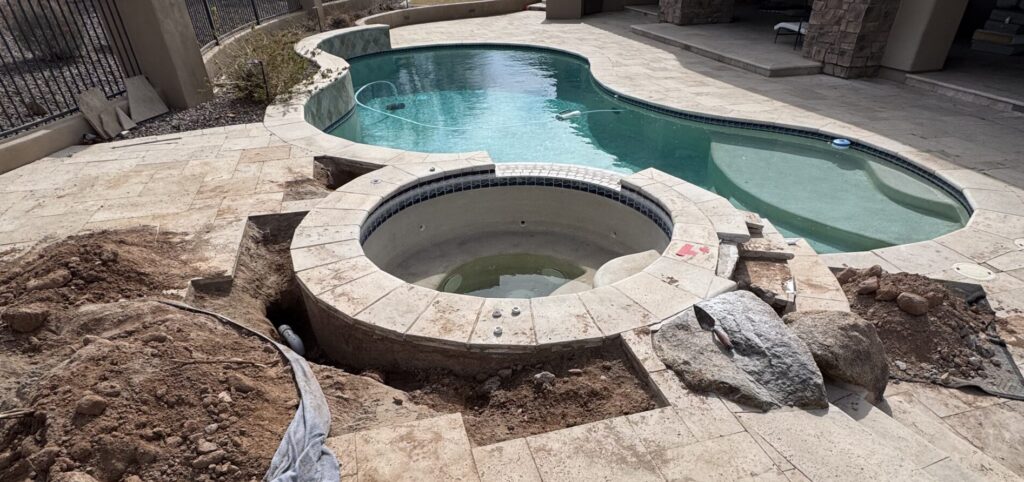
Results You'll See After Spa Leak Detection and Repair
Professional spa leak repair delivers immediate relief and lasting benefits that protect your investment. Water and heating bills drop significantly as hundreds of gallons stop draining away each month, with most homeowners seeing the repair cost recovered quickly through utility savings alone. Chemistry stabilizes when you’re no longer constantly replacing leaked water—sanitizers and balancers last substantially longer, reducing annual chemical costs while maintaining more comfortable, consistent water conditions. Equipment operates without the damaging strain of air infiltration and cavitation, extending the lifespan of expensive pumps, heaters, and control systems by years while preventing premature replacements.
Licensed professionals deliver repairs backed by comprehensive warranties, providing genuine peace of mind that problems are fully resolved rather than temporarily patched. Property damage stops as escaping water no longer erodes soil beneath decks and foundations, protecting your home’s structural integrity and resale value. You’ll stop worrying about overnight water loss, hidden damage, or the next equipment failure—simply enjoying your spa again with confidence that everything functions as it should.
Hot Tub vs. Pool Leak Detection - What's the Difference?
While we excel at both pool and spa leak detection, these services require different approaches due to fundamental system differences that affect diagnosis, repair difficulty, and cost.
System pressure differences: Hot tub plumbing operates at 2-3 times higher pressure than pool systems. This elevated pressure requires specialized testing equipment and affects how we interpret results. Standard pool testing tools often can’t handle spa system pressures accurately.
Plumbing complexity: A typical hot tub has 5-7 different plumbing circuits compared to 2-3 in most pools. Multiple pump speeds, therapy zones, and dedicated features create intricate plumbing requiring systematic testing of each circuit individually.
Heating considerations: Heated water complicates leak detection in several ways. Evaporation rates are significantly higher, making baseline measurements more critical. Heat affects electronic detection equipment response and dye behavior during testing, requiring technicians experienced with heated vessels.
Access limitations: Compact spa designs sometimes limit access for testing equipment. We use specialized tools sized appropriately for hot tub environments and have developed techniques for working in confined spaces without compromising diagnostic accuracy.
Repair timeframes: Many hot tub leaks can be repaired the same day we detect them, while pool repairs often require more extensive work. However, hot tub plumbing repairs may be more complex due to tighter spaces and multiple lines running in close proximity.
Cost differences: Spa leak detection typically costs slightly more than basic pool leak detection due to system complexity and higher pressure testing requirements. However, the total cost is often lower because repairs are frequently simpler and faster to complete.
Emergency Spa Leak Service Available
Our team understands that some spa and hot tub leaks require urgent attention.
Call (480) 781-6101 for priority scheduling when you’re facing emergency leak situations. We’ll work to accommodate urgent needs while maintaining our thorough diagnostic approach and leak detection process.
Our Services
Have questions about pool leak detection or repairs? We’re here to help.
Contact us for expert guidance or to schedule your pool leak detection appointment today.